Choosing the right outdoor security light begins with a practical question: how many lumens do i need for outdoor security lights? The answer depends on more than brightness. Area size, mounting height, beam angle, surface color, and motion patterns all affect useful illumination. A 1,000-lumen floodlight may cover a narrow driveway well. It may perform poorly when mounted too high or aimed across dark, uneven ground.
The U.S. Department of Energy explains that lumens measure total visible light output, while illuminance describes light reaching a surface. This distinction matters. The Illuminating Engineering Society evaluates outdoor lighting through measured illumination, uniformity, glare, and visibility rather than lumen claims alone. IEA lighting analysis also reports that lighting represents about 15% of global electricity use, reinforcing the value of efficient LED security fixtures. Higher output is not automatically better.
In practical purchasing tests, I check the beam pattern at dusk, not only the product label. A 2,000-lumen China outdoor security light with a wide beam can create softer coverage than a narrow 1,200-lumen model. DarkSky guidance also supports controlled, shielded lighting that limits glare and unwanted light spill. That approach improves comfort and neighbor visibility. My early estimates are sometimes too generous. Reflective walls can make a smaller fixture feel brighter, while rain, dust, and aging lenses reduce performance. Reliable specifications should include lumens, wattage, color temperature, detection range, ingress protection, and photometric data. The following guide compares realistic lumen ranges for entrances, paths, garages, yards, and larger commercial perimeters.
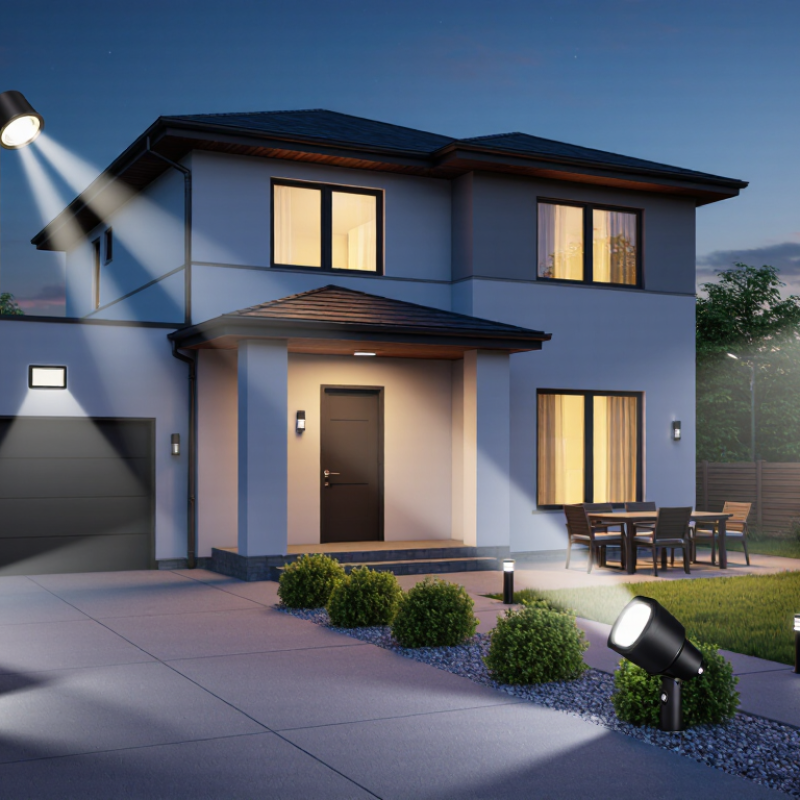
When choosing top outdoor security lights from China, start with lumens, not wattage. Lumens measure visible light output. A 700-lumen fixture can feel bright near a doorway, yet weak across a long driveway. I have seen this mismatch repeatedly during residential lighting checks. Beam angle, mounting height, housing color, and nearby walls change the result. A narrow beam looks intense.
For a small entrance, 500 to 1,000 lumens often provides practical coverage. A side path may need 800 to 1,500 lumens, especially beside dark fencing. Wide driveways commonly benefit from 1,500 to 3,000 lumens, using two fixtures instead of one harsh source. These figures are working ranges, not promises. Rain, dust, aging LEDs, and frosted covers reduce useful brightness over time. That detail is easy to miss.
Good security lighting should reveal faces and obstacles without creating glare for neighbors or cameras. Choose adjustable heads, weather resistance, and a stated lumen rating from a documented test. Check motion-sensor timing at night, when false triggers become obvious. I would leave some margin, but not blindly. Too many lumens can wash out video details and disturb sleep. My early estimates were sometimes excessive. Testing after installation remains the more honest measurement.
Choosing outdoor security lights by lumens starts with the area, not the product label. A narrow walkway usually needs 100–300 lumens. This range guides footsteps without creating harsh glare. A front porch often works well with 300–800 lumens. Mounting height matters. A light fixed three meters above a door spreads farther than one mounted beside the handle.
Driveways generally need 700–1,500 lumens, especially near gates or parked vehicles. For a large yard, detached garage, or wide entrance, consider 1,500–3,000 lumens. Use a broad beam for coverage and a narrower beam for targeted detection. Too much brightness can wash out shadows, annoy neighbors, and reduce camera detail through glare. More light is not always safer.
I usually adjust the estimate after checking surface color, tree cover, and weather exposure. Pale walls reflect light, while dark fences absorb it. Wet ground can also produce distracting reflections. Motion-activated fixtures may need higher output for short periods, but constant lighting can use less. These figures are practical starting points, not strict rules. I have found that a slightly dimmer light, aimed downward, often performs better than an extremely bright fixture facing the street. Leave room for testing. A small angle change can matter more than another 500 lumens.
Typical lumen ranges for matching outdoor lighting to different areas
These ranges are general residential guidelines. Larger spaces, higher mounting heights, wider beam angles, and darker surroundings usually require more lumens. Avoid excessive brightness near bedrooms, roads, and neighboring properties.
For outdoor security lights, lumen needs depend on the area, mounting height, beam angle, and surface color. The Illuminating Engineering Society explains that outdoor lighting should be judged by illuminance and uniformity, not lumens alone. As a practical starting point, use 300–700 lumens for pathways and steps. Entry doors usually need 700–1,500 lumens. Small wall-mounted security lights work well around 1,000–2,000 lumens.
Driveways and medium yards often need 1,500–3,000 lumens. Large yards, warehouses, or open rural areas may require 3,000–6,000 lumens, especially with mounting heights above four meters. More is not always better. A narrow 2,000-lumen beam can create harsh glare, while a wide beam may leave distant corners dark. The U.S. Department of Energy’s solid-state lighting reports indicate that many modern LED luminaires exceed 100 lumens per watt, helping reduce energy use at these output levels.
Tips: Choose motion activation for rarely used areas. Aim the fixture downward, not toward windows or roads. Check the real beam pattern. I have found that 1,500 well-aimed lumens often perform better than 3,000 poorly directed lumens. However, local conditions still matter. Light-colored walls reflect more light, while trees, wet ground, and dust can reduce perceived brightness. Testing one fixture at night is wiser than trusting a specification sheet alone.
| Security Light Type | Typical Application | Recommended Lumens | Suggested Mounting Height | Coverage Guidance | Selection Notes |
|---|---|---|---|---|---|
| Pathway and Step Light | Walkways, steps, garden paths, and entry approaches | 100–300 lm | 0.6–1.5 m | Small, evenly spaced areas; prioritize uniformity over maximum brightness | Use shielded optics to reduce glare and preserve night vision. |
| Porch and Entry Wall Light | Front doors, side doors, porches, and small entrances | 300–800 lm | 1.8–2.5 m | Usually suitable for a single doorway or a compact entry zone | Select motion activation when the light is mainly needed during arrival or departure. |
| Motion-Sensor Security Light | Driveways, entrances, side passages, and residential yards | 700–1,500 lm | 2–3 m | Medium zones; wide beam patterns can cover approximately 10–20 m depending on layout | Aim the sensor across the expected movement path for better detection. |
| Compact Floodlight | Small yards, garages, sheds, patios, and residential driveways | 1,000–2,500 lm | 2.5–4 m | Suitable for a small to medium outdoor area with a 90°–120° beam | Use adjustable heads to direct light only toward the required area. |
| Dual-Head or Wide-Angle Floodlight | Large driveways, backyards, building corners, and loading areas | 2,000–4,000 lm | 3–5 m | Broad coverage from two independently aimed light heads | Two moderate-output heads can reduce harsh shadows better than one narrow, high-output source. |
| Dusk-to-Dawn Area Light | Continuous overnight lighting for yards, walkways, and exterior walls | 800–2,500 lm | 3–6 m | Medium outdoor areas requiring consistent, rather than triggered, illumination | Choose a photocell or timer and consider lower output to limit energy use and light spill. |
| Solar Security Light | Remote paths, garden edges, sheds, and locations without convenient wiring | 300–1,500 lm | 1.8–3.5 m | Small to medium zones; performance varies with solar exposure and battery capacity | Check the rated runtime, charging conditions, winter performance, and motion-mode output. |
| Perimeter and Fence-Mounted Light | Boundary lines, gates, narrow side yards, and security fencing | 500–1,500 lm | 1.5–3 m | Best for linear coverage using multiple lower-output fixtures | Space fixtures for overlapping light without creating excessive brightness at property boundaries. |
| Commercial Area and Parking Light | Small parking lots, commercial yards, service areas, and facility entrances | 3,000–10,000 lm | 4–8 m | Large-area lighting requiring careful spacing and photometric planning | Use a measured lighting plan rather than selecting by lumens alone. |
Choosing the right outdoor security light starts with more than its lumen rating. For a small doorway, 700 to 1,200 lumens may provide clear facial visibility. A driveway often needs 1,500 to 3,000 lumens. Larger yards may require several lower-output lights instead of one harsh fixture. Too much brightness can create deep shadows and disturb nearby homes.
Mounting height changes the result significantly. A light installed three meters high spreads illumination widely but loses intensity on the ground. A narrow beam reaches farther, while a wide beam covers paths and entrances better. Wall color matters, too. Pale surfaces reflect light, but dark fences absorb much of it. I once judged a light as weak until cleaning dust from its lens improved the output noticeably.
Motion settings, weather, and light color also affect practical brightness. A sensor that activates too late may leave visitors in darkness. Rain, fog, and snow reduce visibility, especially with cool white light. Around 3,000 to 4,000K usually offers a balanced appearance for homes. Solar models may produce fewer lumens after several cloudy days. Battery condition matters. Check actual tested output, beam angle, and runtime rather than relying on advertised peak lumens. A 2,000-lumen light can still disappoint if its lens wastes light or its sensor points toward moving branches.
Choosing lumens starts with the property, not the product label. Lumens measure total light output, while beam spread decides where that light goes. A narrow beam can look bright but leave nearby steps dark.
For a small entrance, 300 to 700 lumens often provides comfortable visibility. A driveway usually needs 700 to 1,500 lumens, depending on its length and surface. Large yards may need several moderate fixtures instead of one harsh floodlight.
Mounting height changes the result. At two to three meters, 800 lumens may cover a doorway well. Higher mounting can require more output or a wider beam. Pale walls reflect light, while dark fencing absorbs it. Wet pavement also creates glare.
I once tested a bright lamp above a garage and found faces became harder to recognize. The issue was poor angle, not insufficient lumens. Aim fixtures downward and keep direct light away from windows.
Motion-activated lights can use higher lumens briefly, reducing nighttime glare and energy use. For a quiet side path, 400 to 800 lumens may be enough. For a broad parking area, 1,500 to 3,000 lumens can be reasonable when several zones need coverage.
Check real illumination after installation at night. Shadows often reveal mistakes. Manufacturer lumen figures may describe new LEDs under ideal conditions, not years of outdoor exposure.
Leave room for adjustment. A slightly dimmer light can feel safer than an overpowered one.
A narrow walkway often needs 100–300 lumens. This guides footsteps without producing harsh glare. Aim the light downward.
A front porch commonly needs 300–800 lumens. Mounting height changes the result. A light three meters high spreads farther than one beside the door.
A doorway usually needs 700–1,200 lumens for clear facial visibility. A small wall-mounted fixture may need 1,000–2,000 lumens.
Most driveways need 1,500–3,000 lumens. Use stronger coverage near gates and parked vehicles. A wide beam helps avoid dark edges.
Large yards may need 3,000–6,000 lumens. Several lower-output lights can work better than one harsh fixture. More brightness is not always safer.
Beam angle strongly affects coverage. A narrow 2,000-lumen beam reaches farther but may create glare. A wide beam covers entrances better.
Pale walls reflect light, while dark fences absorb it. Wet ground can create distracting reflections. Rain, fog, dust, and snow reduce useful visibility.
Motion activation suits areas used occasionally. The sensor should activate before someone reaches the entrance. Constant lighting may use less energy in some situations.
Around 3,000–4,000K usually gives a balanced appearance. Very cool light can feel harsh during rain or fog. I may still adjust this preference.
Test one fixture at night. Check the beam, shadows, sensor timing, and actual brightness. A small angle change may matter more than 500 extra lumens. Specification sheets can mislead.
Choosing the right brightness for outdoor security lighting starts with understanding lumens, which measure the total amount of visible light produced by a fixture. The answer to “how many lumens do i need for outdoor security lights” depends on the area, mounting height, coverage, and desired level of visibility. Smaller spaces such as doorways, porches, and pathways generally need fewer lumens, while driveways, backyards, entrances, and larger open areas require stronger illumination.
Different light types call for different lumen ranges, but brightness should not be judged by lumens alone. Beam angle, color temperature, motion sensors, fixture placement, weather conditions, surrounding surfaces, and existing ambient light can all affect performance. To choose the right option, assess the size and purpose of each area, identify potential shadows or blind spots, and select balanced lighting that improves visibility without creating excessive glare. A well-planned setup can provide practical security, comfort, and energy-conscious outdoor illumination.
